Improving Cancer Outcomes: Strengthening collaboration between the NHS and independent sector
Improving Cancer Outcomes: A Shared National Challenge
Cancer remains one of the greatest health challenges facing England. More than 350,000 people are diagnosed with cancer every year, and around one in two people will develop the disease during their lifetime. While advances in prevention, diagnosis and treatment mean more people are surviving cancer than ever before, cancer remains one of the leading causes of death and places significant pressure on patients, families, the NHS and the wider economy.
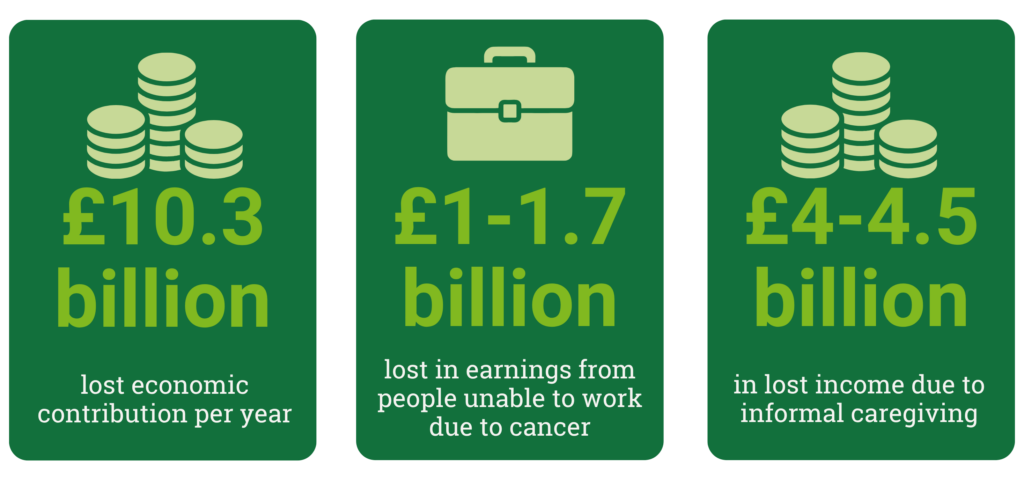
Cancer is not only a major clinical challenge but an economic and societal one. Cancer-related premature mortality is estimated to cost the UK economy around £10.3 billion a year in lost economic contribution, with a further £1–1.7 billion associated with people being unable to work because of cancer and £4–4.5 billion in informal caregiving.[1]
Early diagnosis remains the single biggest opportunity to improve cancer outcomes. Diagnosing cancer at an earlier stage not only increases the chances of successful treatment and survival but can also reduce the need for more intensive treatment, improve patients’ quality of life and help more people return to work and normal daily activities.
Despite significant progress in recent years, England continues to face major challenges. Cancer waiting time standards have repeatedly been missed, demand for diagnostics and treatment continues to grow, and survival for several common cancers still compares unfavourably with other leading healthcare systems. An ageing population, increasing demand and workforce pressures mean these challenges are unlikely to diminish in the coming years.
The Government’s National Cancer Plan recognises these challenges and sets out an ambitious programme to improve cancer outcomes through earlier diagnosis, faster access to treatment, greater use of innovation, more personalised care and increased participation in research. Alongside this, the Government’s Ten Year Health Plan for England sets a broader direction for healthcare, focusing on prevention, shifting more care into community settings, making better use of technology – including greater use and integration of services into the NHS App – and improving patient choice.
These ambitions are the right ones. However, delivering them will require every part of the health and care system to work together. Improving cancer outcomes cannot be achieved by the NHS alone. It will depend on making the best possible use of the expertise, capacity, innovation and investment available across the whole healthcare system.
The independent sector is already an integral part of England’s cancer ecosystem. Every day, independent providers diagnose cancer, deliver NHS-funded diagnostic tests and treatment, care for privately funded patients, undertake pioneering clinical research, invest in new technologies and support people living with and beyond cancer. Many clinicians already work across both NHS and independent settings, helping to share expertise and maintain continuity of care for patients.
Patients themselves increasingly experience cancer care as a single journey rather than separate NHS and private pathways. A patient may receive diagnostic imaging privately following an incidental finding, undergo NHS surgery, receive radiotherapy in an independent hospital through an NHS contract, participate in a clinical trial and access rehabilitation or survivorship services outside the NHS. For many people, high-quality cancer care already depends on effective collaboration between organisations rather than care being delivered entirely within one sector.
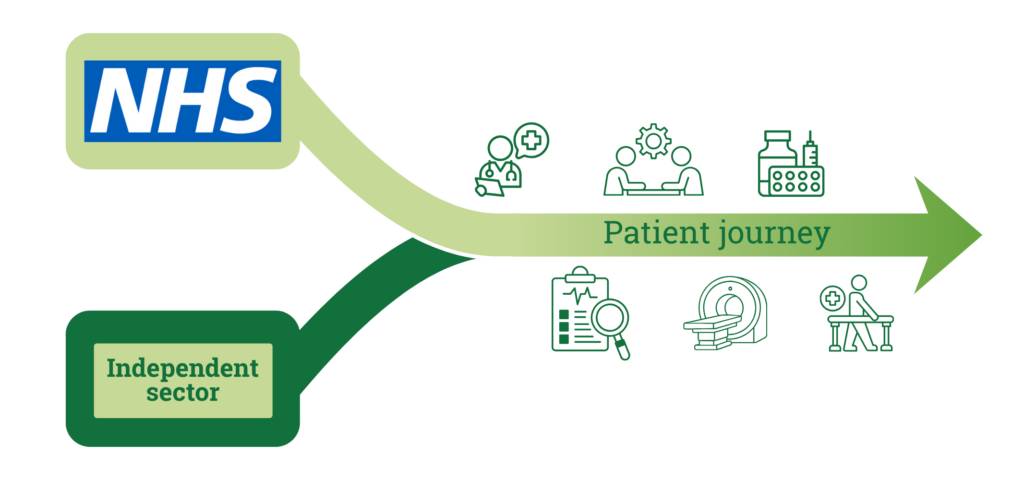
The challenge is that the healthcare system has not always kept pace with this reality. Too often, patients experience unnecessary friction as they move between providers. Administrative barriers, inconsistent referral pathways, limited interoperability of patient records and contractual restrictions can all delay care, duplicate investigations and create unnecessary complexity for patients and clinicians alike. With the NHS App becoming increasingly important in cancer care, there is an opportunity to make sure patients and clinicians can see what services are available and how to access them, including independent-sector provision, ensuring both the accessibility and visibility of system capacity. At a time when speed of diagnosis and treatment can directly influence outcomes, these barriers should be removed wherever possible.
Improving cancer outcomes is therefore about making better use of an established partner that is already delivering high-quality care for both NHS and private patients. By removing unnecessary barriers to collaboration and creating genuinely seamless pathways across organisational boundaries, England has an opportunity to diagnose cancer earlier, treat patients more quickly, improve survival, and deliver a better experience for every patient.
This briefing explores how independent providers are already contributing across the cancer pathway, from prevention and screening through to diagnosis, treatment, rehabilitation and research and sets out practical recommendations to strengthen collaboration in support of the National Cancer Plan and the ambitions of the NHS 10 Year Health Plan.
[1] https://news.cancerresearchuk.org/2025/06/27/health-is-wealth-tackling-the-cost-of-cancer-to-grow-the-economy/