Improving Cancer Outcomes: Strengthening collaboration between the NHS and independent sector
Removing Friction from the Cancer Pathway
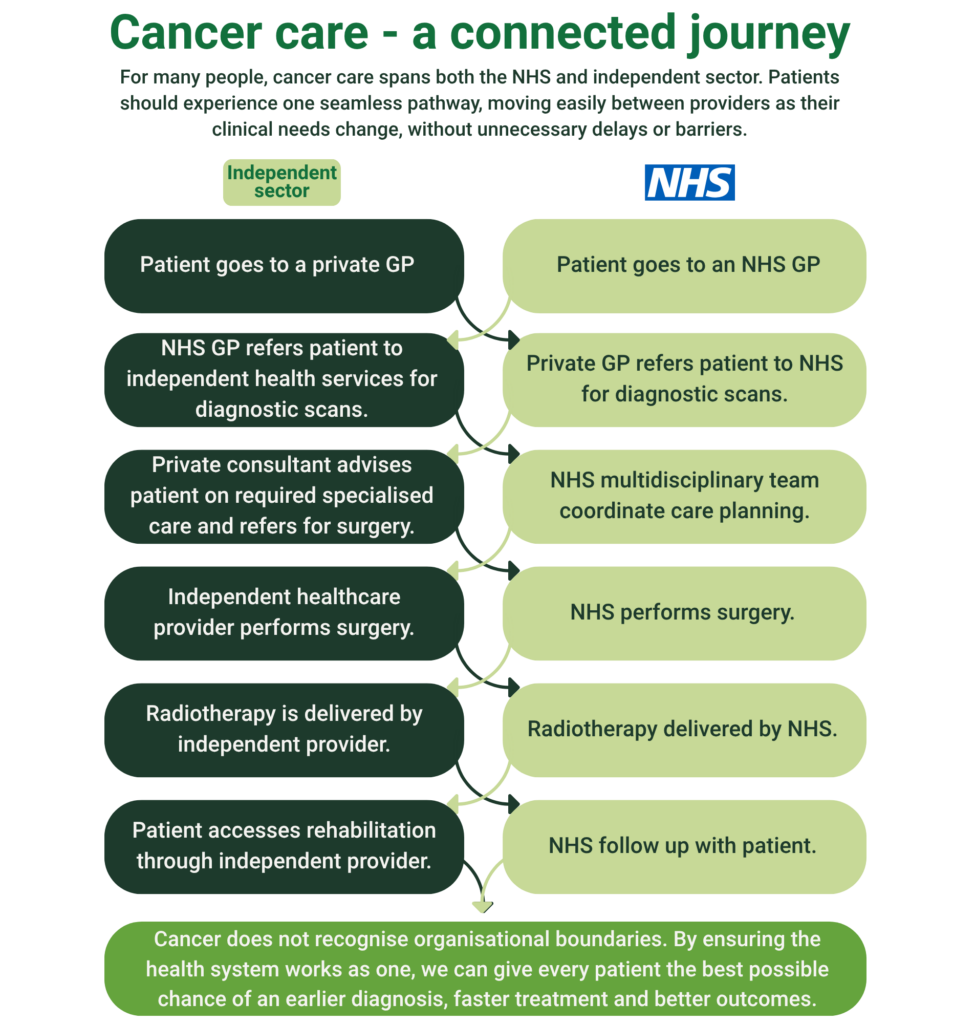
Cancer does not recognise organisational boundaries, and neither should cancer care. Patients should experience one seamless pathway regardless of whether their care is delivered by NHS or independent providers.
In reality, patients increasingly move between different parts of the healthcare system throughout their cancer journey. A patient may undergo an MRI scan in the independent sector, receive surgery in an NHS hospital, access radiotherapy from an independent provider through an NHS contract, and receive rehabilitation or survivorship support elsewhere. This is already the reality of modern cancer care.
However, the systems that support patients have not always kept pace with this increasingly integrated model. Too often, patients encounter avoidable barriers when moving between providers. These barriers can create unnecessary delays, duplicate investigations, increase administrative burden and ultimately affect patient experience and outcomes.
A recent NHS Resolution thematic review of delayed cancer diagnosis highlighted concerns that patients who have paid for private diagnostic tests can be disadvantaged if they cannot afford to continue treatment privately. The review found that independent providers have reported being unable to make direct urgent suspected cancer (formerly two-week wait) referrals into NHS services when a patient requests transfer to NHS care. Instead, patients may be required to return to their GP to begin the referral process again, creating unnecessary duplication, delay and administrative burden despite a qualified clinician having already made a clinically informed decision to refer.
Independent providers have identified several areas where greater collaboration would improve both patient care and system efficiency, including:
- More straightforward referral into NHS urgent suspected cancer pathways following incidental findings in the independent sector.
- Better interoperability and sharing of patient records, imaging and diagnostic information to reduce duplication and support continuity of care.
- Stronger integration between NHS and independent multidisciplinary teams through clear governance frameworks, ensuring clinicians can work together more effectively.
- Clearer contractual arrangements and escalation pathways so patients can move smoothly between providers when their clinical needs change.
- Greater opportunities for independent providers to participate in national cancer research and clinical trials, widening patient access to innovation.
- Improved patient choice in cancer diagnostics, enabling patients to access the most appropriate provider while supporting faster diagnosis and better use of available capacity.
Removing these barriers is not about changing who provides cancer care. It is about ensuring that organisational boundaries do not stand in the way of timely diagnosis, effective treatment and the best possible outcomes for patients.